

#gemystique
Examining a blue tourmaline this week and looking at some well-known tourmaline inclusions. Let’s dive a little deeper into them one by one.
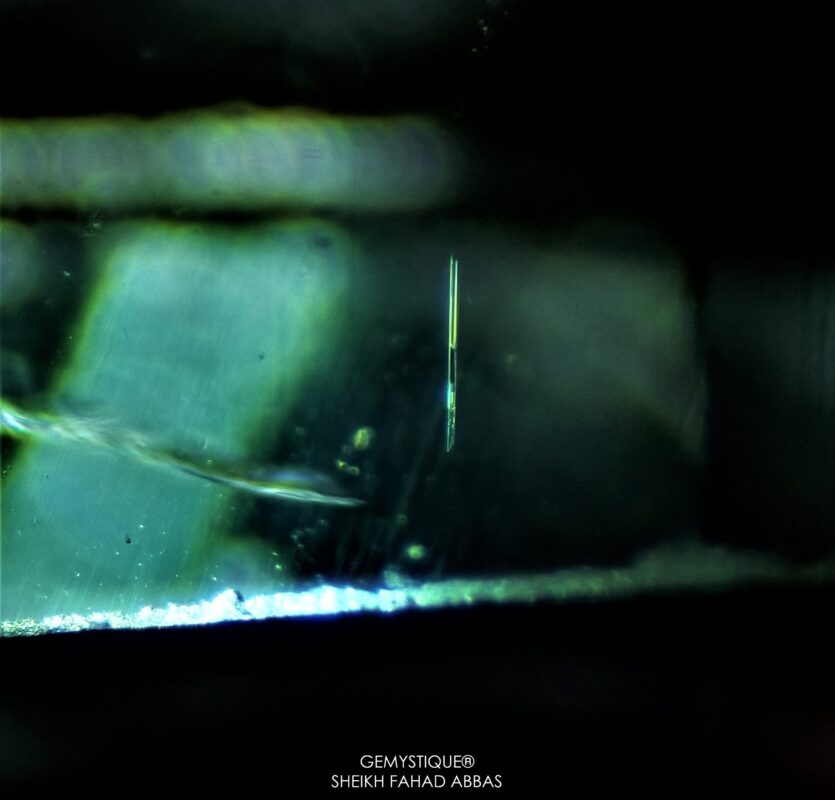
1. Growth and Color Zoning – Is a feature that is commonly associated with tourmaline. From striped zones of different colors to angular-hexagonal growth and color zones, they may vary in appearance. “In most elbaite and liddicotite crystals, color zoning is immediately noticeable. Though not inclusions in the classic sense of the term, these color phantoms inform us about the chemical and physical changes in the growth conditions of the host tourmaline.” – PhotoAtlas Vol 2 Pg. 763.
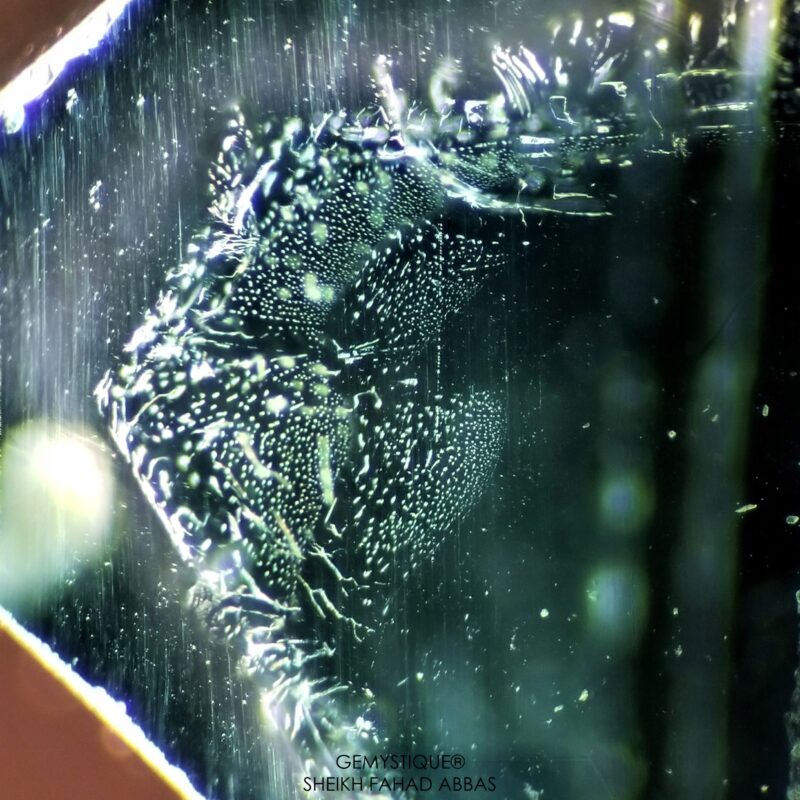
2. Fluid Inclusions – Known as Trichites, these are a trademark feat of tourmaline. Although they can vary in appearance, they commonly consist of thready-fine, thin and irregular shaped tubes/fibers filled with watery solutions. They may also be flat and contain 2 or 3 phases. More often than not these fluid inclusions cross the different color zones uninterruptedly, however the tourmaline at hand shows a very interesting observation of the exact opposite. Notice the outline of these inclusions matches the border of the colorless zone. Few fluid fingerprints can also be observed.
3. Growth tubes or channels – Another common inclusion in tourmaline, these can be isolated or found tightly packed together in great numbers and always run parallel to the C-Axis. “Growth tubes or channels result from growth disturbances, dislocations or blockages by solid mineral particles, even by tiny tourmaline crystals. Before becoming sealed, these channels may trap inclusions which were present during crystal growth.” – PhotoAtlas Vol 2 Pg. 763.
Sheikh Fahad Abbas – GIA GG, AJP
Founder & Owner – Gemystique®
