
#gemystique
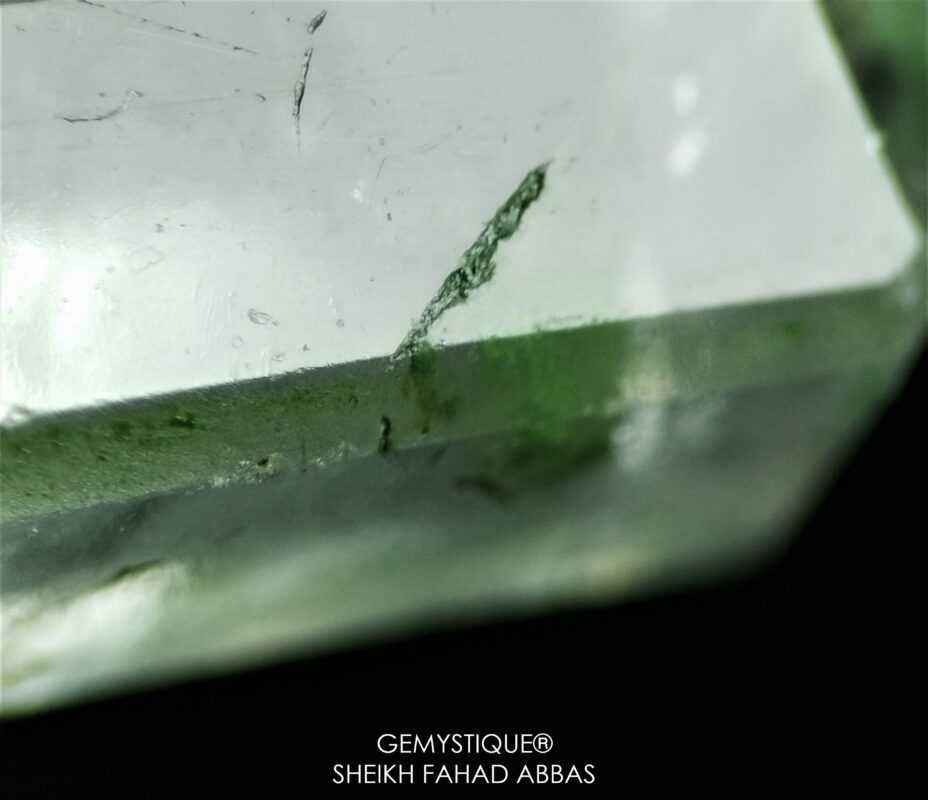
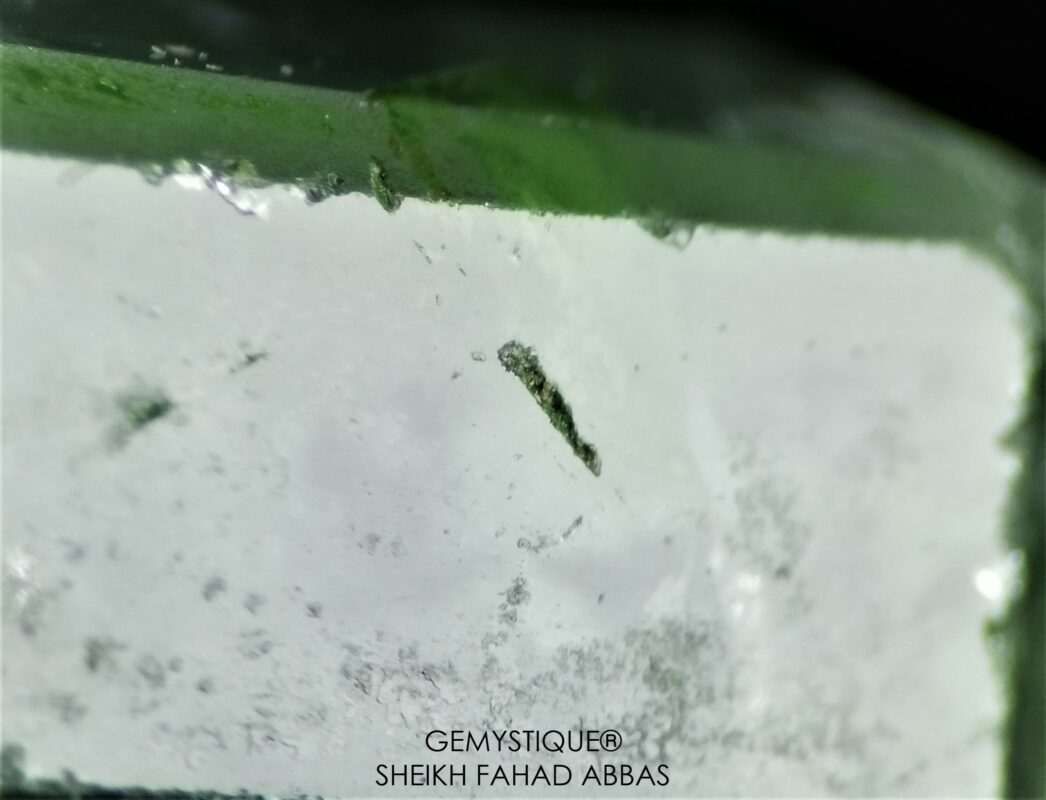
Reflected light is the most effective way to examine the surface of a gem. By using this method, a difference in luster, blemishes and surface reaching fissures/breaks tend to pop right up. The exact place where the internal fissure breaks the surface may appear as a dark line or a dark cavity. But what appears dark under reflected light, reveals its true self under detailed examination.
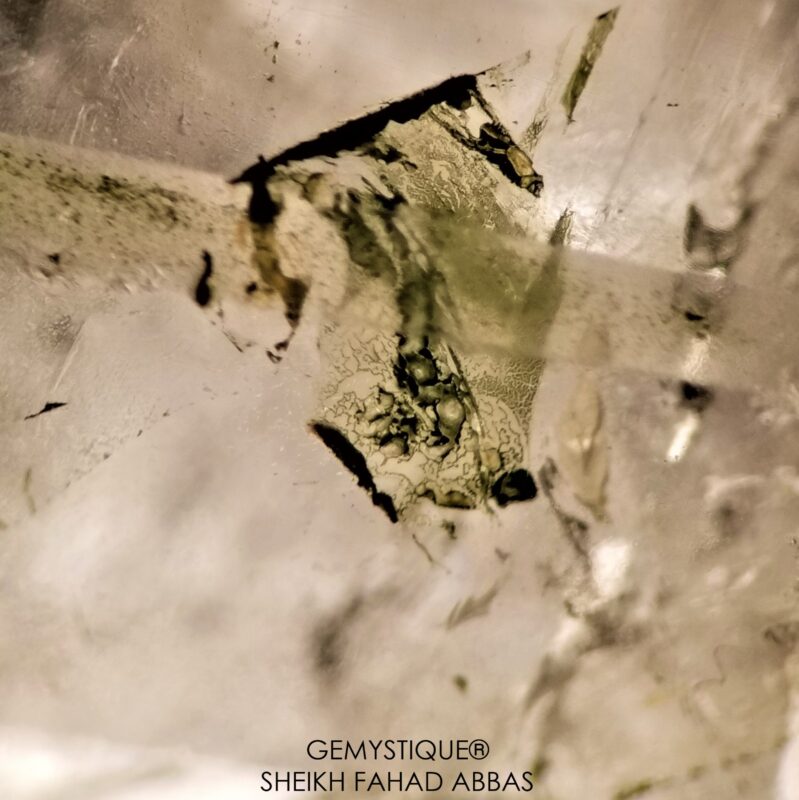
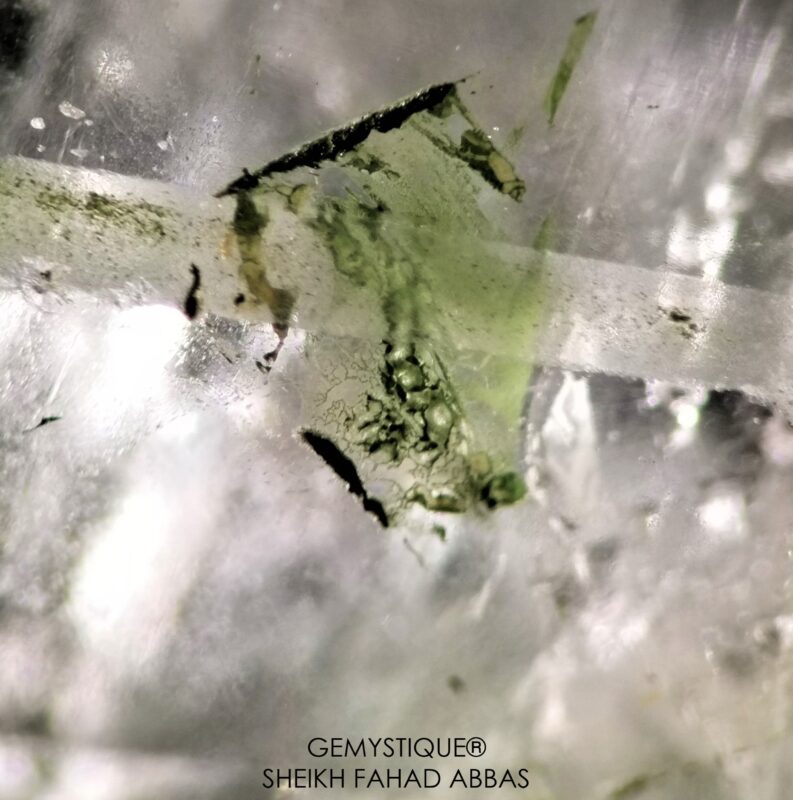
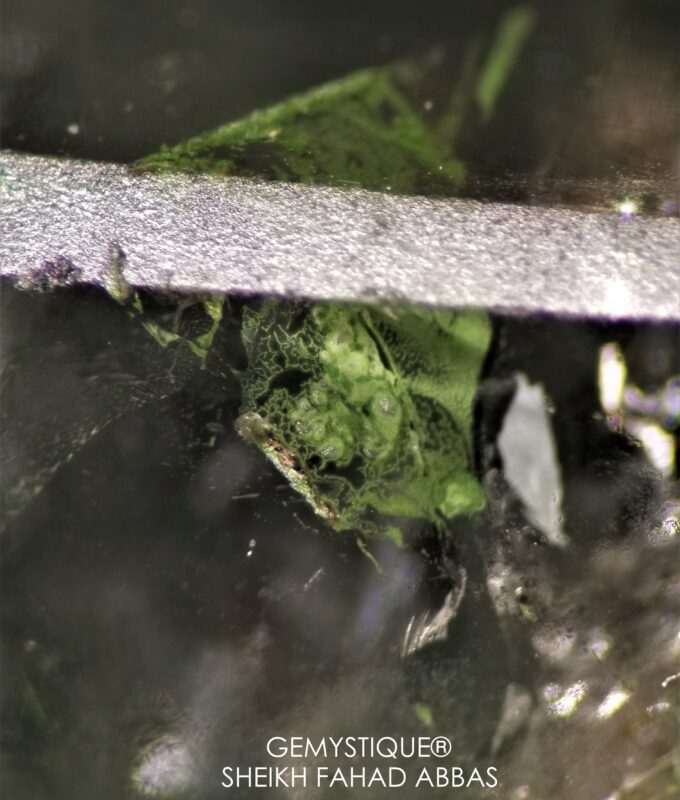
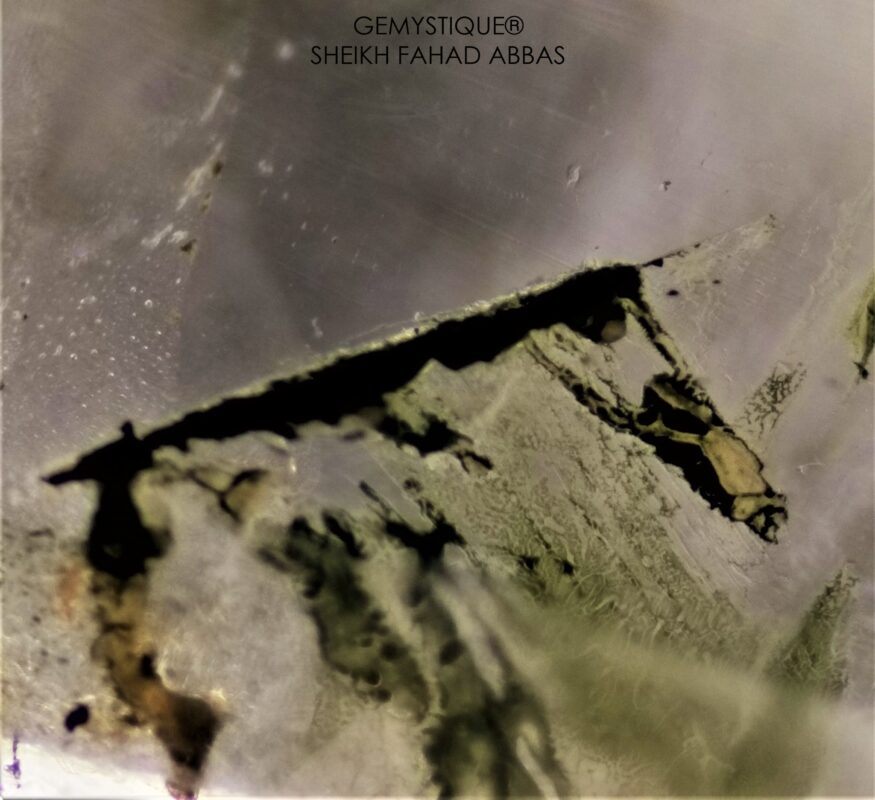
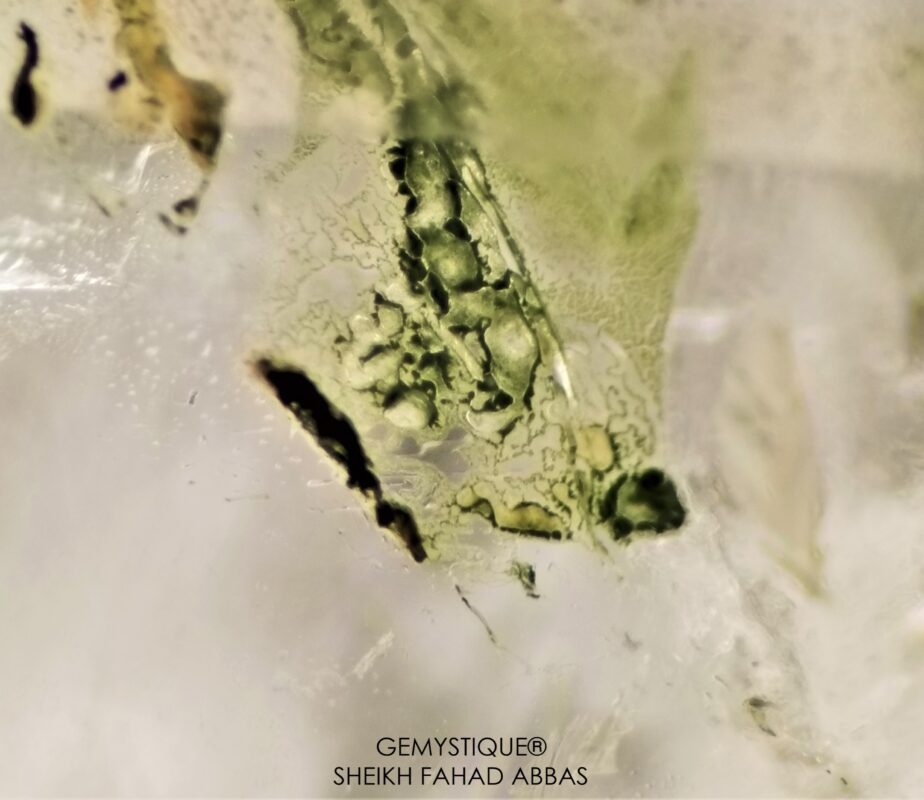
What we see here are 2 surface reaching breaks in a faceted Fluorite. Both close to the girdle, one breaks the crown and the other breaks the pavilion. Internally however, it’s just one large inclusion. As this inclusion was breaking the surface, it became susceptible to external materials penetrating through the breaks. That is exactly what has happened. Unidentified external green matter has penetrated the fissures and has eventually dried out. The alien matter, after drying out has created dendritic patterns in some areas. A classic example of a ‘Epigenetic Fluid Inclusion’.
Epigenetic Fluid Inclusion: Inclusions that are formed after the growth process of the host gem has completely ended. These inclusions form when external impurities or liquids penetrate into the open fractures and fissures and then dry out or crystalize inside.
Images capture how this interesting inclusion appears under varying lighting conditions and then a close up of the immediate area around both breaks.
Illumination techniques applied: Dark-Field Illumination, Oblique Fiber-Optic Illumination, Horizontal Fiber-Optic Illumination and Reflected Light.
Sheikh Fahad Abbas – GIA GG, AJP
Founder & Owner – Gemystique®
Gemology
Fluorite Inclusions – Part 1
